Cargo Theft & Freight Fraud Prevention
Thieves now pick their loads from a keyboard, then send someone to collect them. This guide shows how logistics teams spot a questionable handoff, keep the evidence and act before the freight disappears.
For the logistics leaders who hand freight to someone else every day, and the shippers who trust them with it.
Dealing with a suspected theft right now? Go to the first-response checklist.Key finding
Scott Cornell, who has investigated cargo theft for more than 30 years, estimates that strategic theft, done through deception and fake identities, made up about 3% of cargo theft before 2020 and is near 30% now. It lands on the brokers and 3PLs in the middle.
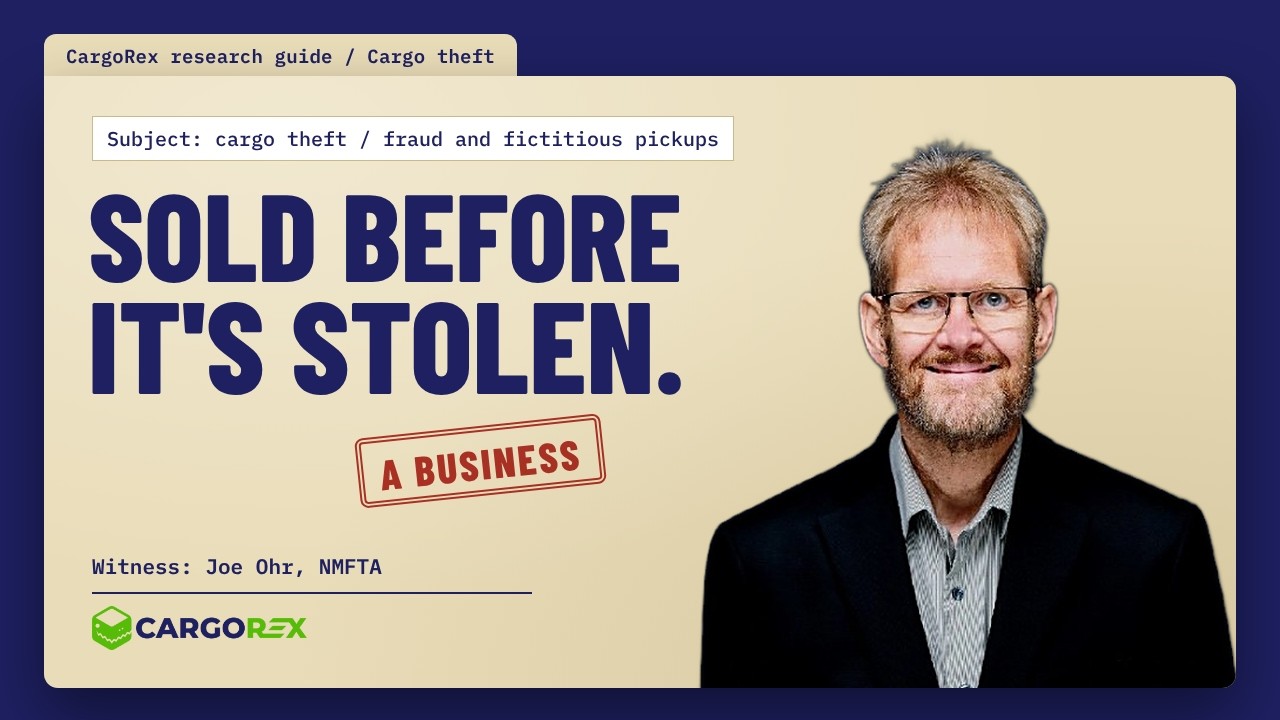
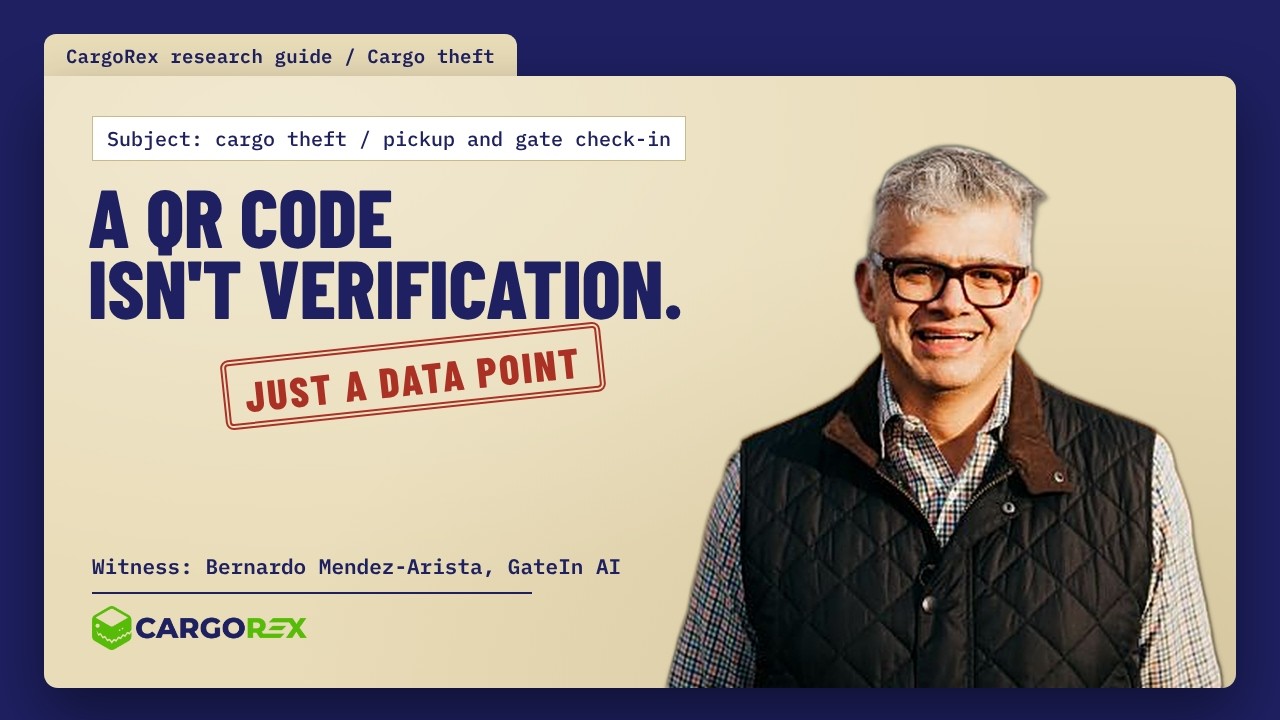
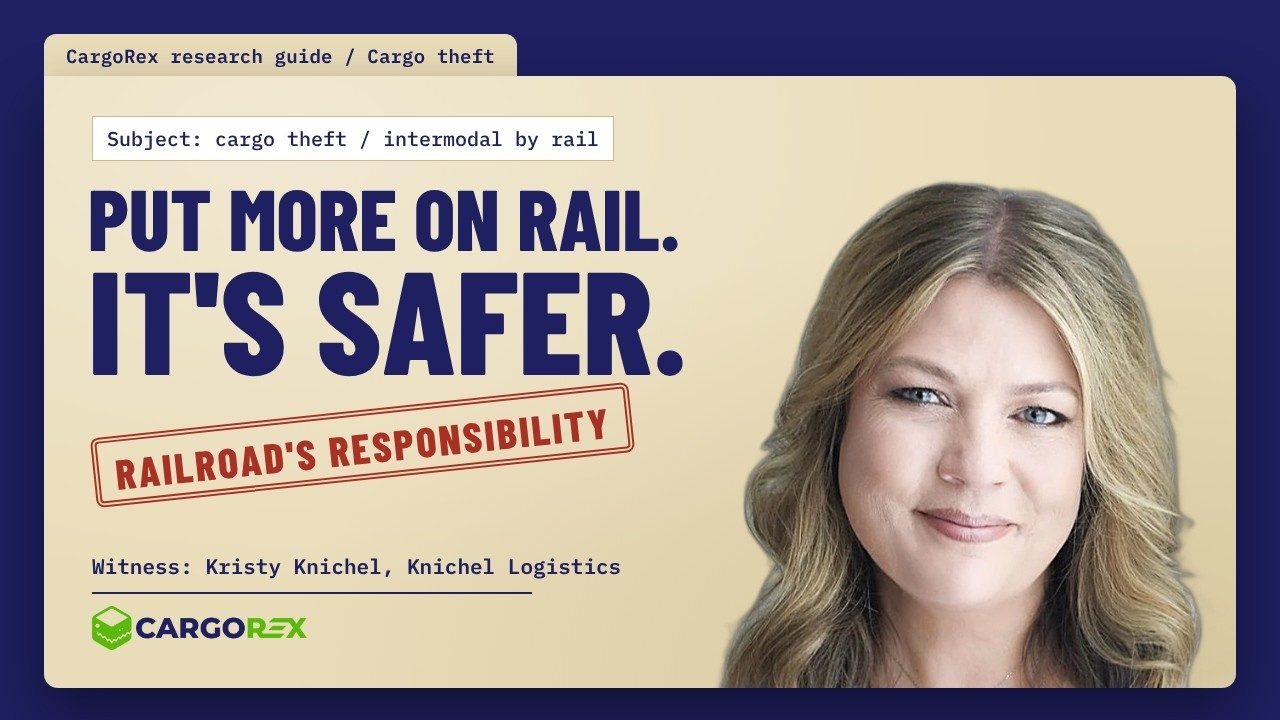
Six perspectives on one shipment: Scott Cornell, SPG; Joe Ohr, NMFTA; Bernardo Mendez-Arista, GateIn AI; Kristy Knichel, Knichel Logistics; Reed Loustalot, Truck Parking Club; Jared Palmer, EPIC
Filed November 2026. Every figure sourced and dated.
The short answer
Preventing cargo theft and freight fraud now starts before the truck arrives. Fraud rings use phishing, spoofed identities and AI to find and divert high-value loads, and as booking and tracking move to software and AI agents, those systems have become a target too. Defenders use the same tools to catch patterns people miss, but a tool can only flag a mismatch. Someone with the authority to stop the load still has to verify it and call the right person. The teams in this guide pair good tools with trained people and a written plan they actually follow.
Four questions to ask about every load:
- Who is actually moving or receiving this freight?
- What evidence proves each handoff happened the way it should?
- Who can stop the load when something does not match?
- Who responds, and how fast, when an expected movement never happens?
Fewer thefts, bigger losses
Cargo theft no longer looks like a crew cutting a padlock at a truck stop, although that still happens every day. A growing share starts with an email. Someone clicks a link, a carrier account gets taken over, and a real-looking driver shows up for a load that was sold before it was stolen.
The thieves are getting pickier. In Q2 2026, CargoNet counted 26% fewer thefts than a year earlier, but losses more than doubled. So prevention can't stop at the dock door. It has to start with who books the load and run through the first hours after a loss.
This guide follows a shipment through each handoff. Six people who work these problems every day explain what to check, what to keep and who should act.
Cargo theft statistics: what the record shows
Every count below covers reported thefts only, so treat it as a floor. Most figures cover the U.S.; CargoNet's estimates cover the U.S. and Canada. Each figure shows its source and date.
$725M
Estimated cargo theft losses in the U.S. and Canada in 2025, up 60% from 2024.
Verisk CargoNet, Jan. 22, 2026$18M a day
ATRI's estimate of what cargo theft costs trucking, as high as $6.6B a year.
ATRI, Oct. 8, 202573.5%
Of cargo stolen from motor carriers is never recovered.
ATRI, The Fight Against Cargo Theft, October 2025The interviews
Six conversations recorded in September 2026, five at the IANA Intermodal EXPO in Long Beach. Each one covers a different moment where freight can go missing.
What the witnesses agree on
People and process first, then the technology
Every guest uses technology. None of them think it works alone. Scott Cornell's clients start with written procedures, then add security devices and software on top. When a tool fails, he usually finds the tool worked and the team did not use it consistently. He also pushes back when companies cut vetting staff after buying a verification service. His advice: keep the people and make them more effective.
Joe Ohr adds the other half. Fraud rings now use AI to clean up their English and send phishing emails at scale. Spotting one fake among thousands of real messages takes software built for that job.
“Quite often it fails not because the technology fails, but because the user fails to use it appropriately or use it consistently or use it in the right way.”
“You're not trying to even find the needle in a haystack. You're trying to find the needle in the stack of needles.”
A cyber problem becomes a freight problem fast
Email is still the main way in, according to Joe Ohr. CargoNet's Q2 2026 report agrees: business email compromise was the main way in for many of the quarter's most sophisticated theft schemes. Joe describes these groups as businesses with recruiting and benefits. Often the freight is sold before it is stolen.
“It really becomes a freight problem when freight becomes at risk.”
More in Exhibit D
The cybersecurity section covers where attackers get in, how AI agents change the risk and the basics to put in place first.
Train the people who release the freight
Security knowledge often sits with a small risk or security team. Scott Cornell trains the dock workers, dispatchers and carrier reps instead, because they are the ones handing over the freight. Within a week or two of a training session, his clients often report catching fake IDs at the dock door. Sales teams need the same training. A new contract can commit a company to moving high-risk freight in high-theft areas before security has seen it.
Write it down, then prove you do it
Jared Palmer, an insurance broker and attorney, warns that a written security policy can work against you. If the company does not follow its own policy, the document becomes evidence after a loss or a lawsuit. Kristy Knichel found the same gap from the operations side. When her team reviewed how five groups handled the same process, all five got the job done in slightly different ways. Now she has people walk through their actual steps, not just read the SOP.
“Can you actually do this in practice? Because if you don't, it's actually worse to have this written policy that's now evidence.”
Speed decides whether the freight comes back
Stolen freight moves fast. It gets cross-docked, relabeled and sometimes shipped overseas within days. Scott Cornell once recovered a load of metal while thieves were unloading it; 30 minutes later it would have been gone. Jared Palmer says you have about 24 to 48 hours after you learn of a theft before the freight is likely headed for a port and out of the country. Calling three months later with no driver, date or location leaves investigators almost nothing to work with.
“Hope is not a strategy.”
Where the witnesses disagree: how far to trust the tools
“Humans can't do it. We can't tell the difference. AI's got to be able to do that.”
“We pulled them out of the haystack for you, but you still have to verify it.”
“I feel like we're just relying on technology a little too much.”
The chain of custody
A load changes hands several times between tender and delivery. Each handoff has a warning sign, a record that proves what happened, an owner who can stop the load and a next step. This map is CargoRex's summary of the six interviews. Select a handoff to see what to check.
Before tender
Heard from: Joe Ohr, NMFTA; Jared Palmer, EPICNew contact details, an email domain that is one letter off, or carrier records that do not line up
Verification history and how the contact was confirmed
Carrier onboarding or risk team
Call a number you already had on file before you approve the carrier
High-value loads posted on public load boards
Jared Palmer still sees $400,000 copper loads posted to load boards on a Friday afternoon and handed to carriers no one has spoken to. Keep high-value freight with carriers you know by voice.
FMCSA advises brokers and carriers to confirm contacts through information they already have on file, and warns that documents themselves can be faked. The FBI recommends verifying pickups through a second, independent channel before releasing any load.
Cybersecurity: how thieves steal freight through your systems
Every handoff in this guide now has a digital side: the email thread, the load board post, the TMS record and the telematics login. Get into those and you can redirect freight without touching a lock. Joe Ohr of NMFTA says a cyber problem becomes a freight problem the moment an attacker can message the driver, reroute the truck or change the bill of lading.
The attackers are organized. Proofpoint threat researcher Ole Villadsen has tracked about 15 groups actively targeting transportation companies with malware, remote access tools and credential phishing, all aimed at stealing cargo. In one case he shared, a carrier's dispatcher clicked a fake broker setup link while rushing to cover a load. The attacker took over his accounts and started booking loads under the carrier's name.
48%
Of breaches involved a third party, such as a vendor or software partner, up 60% in a year.
Verizon, 2026 Data Breach Investigations Report29 min
Average time in 2025 for attackers to move from the first account they took over into the rest of the network. The fastest took 27 seconds.
CrowdStrike, Feb. 24, 202687
Ransomware incidents at transportation and logistics companies in Q1 2026, the third most of any industrial sector. Fifty hit logistics companies.
Dragos, June 3, 2026“As an industry, we are so trusting, and sometimes that trust becomes a vulnerability.”
“Fast is good, but slow is accurate.”
AI agents add a new kind of user
Logistics companies are handing routine work to AI agents that quote, book, schedule appointments and chase status updates. Gartner expects the average Fortune 500 company to run more than 150,000 agents by 2028, up from fewer than 15 in 2025. Only 13% of organizations think they have the right governance in place for them.
Every agent needs logins and permissions to do its job, so each one is another identity an attacker can borrow. In 2025, CrowdStrike saw attackers plant malicious prompts in generative AI tools at more than 90 organizations. An agent that reads email and books freight sees the same spoofed tender a dispatcher does, and it can act on it in seconds unless a person has to approve the step.
Defenders use AI too, but Joe Ohr still tells teams to pick up the phone.
Where attackers get in
- Email is still the biggest way in. Attackers send thousands of messages, see who clicks, then research those companies for freight worth stealing.
- Load board and carrier accounts. The FBI warns that criminals use compromised carrier accounts to impersonate brokers, and the carrier may not know until a broker calls about a missing load.
- Drivers on open truck stop Wi-Fi, who often miss the cybersecurity training the office gets.
- Maintenance shops running older software outside IT's protection.
- Former employees who can still log in to the TMS or telematics.
- Fake LinkedIn profiles posing as company managers to learn who the drivers and dispatchers are.
- Software integrations and AI agents with standing access to your systems.
Cyber basics to put in place first
- Turn on multi-factor authentication for email, load boards, the TMS and telematics.
- Give every person, integration and AI agent only the access it needs, and review agent permissions the way you review an employee's.
- Remove access the day someone leaves, including the TMS and telematics.
- Require a person to approve any change to a delivery address, payment details or carrier contact, whether a person or an agent asks for it.
- Watch for new mailbox rules that forward email outside the company. The FBI lists them as a sign of compromise.
- Slow down on urgent emails and check the sender's domain. Ole Villadsen treats every inbound email as potentially malicious.
- Run a cyber tabletop drill. Joe Ohr asks how long your business could go without moving freight if your systems went down.
- Start with CISA's free cybersecurity services and NMFTA's guidebooks.
Statement of Scott Cornell, recorded September 2026
Educate the frontline people as much as you educate those experts because they're the ones that are actually releasing the freight.
Five steps before your next high-value load
- 1
Verify the person, not just the company
A carrier's authority and insurance can check out while the person booking the load is an impostor. Confirm through a number you already had, and recheck when contact details change.
- 2
Match more than one data point at pickup
Bernardo Mendez-Arista's team checks five or six: container number, chassis number, truck plate, DOT number, timestamp and condition. When something does not match, a person decides.
- 3
Plan where the truck will stop
Approve secure yards in advance and confirm what security each one actually has. When Reed Loustalot worked in brokerage, his team kept a list of vetted yards. If a driver couldn't reach one, the rule was to back the trailer against a wall so the doors couldn't open.
- 4
Put a tracker in the freight
Jared Palmer used to pay $750 for a covert tracking device. He now sees them for about $15. Scott Cornell prices one near $50, plus a $10 to $15 monthly subscription. Before you buy, ask who watches the alerts. Either way, the cost is small next to a lost load.
- 5
Run a theft drill
Scott Cornell and Joe Ohr both recommend tabletop exercises. Pretend a load just went missing and see who calls whom, what information they have and how long it takes.
Cargo theft prevention, by role
Keep vetting carriers after onboarding. A clean first check does not cover a takeover months later.
Do not post high-value loads on public boards. Route them to carriers you have a real relationship with.
Write down your carrier selection process and follow it. Since the Supreme Court's Montgomery decision in May 2026, those records can matter in negligent-selection lawsuits. Ask your own counsel what to keep.
Train sales as well as operations, so new business does not outrun your security plan.
A carrier contact who will only communicate by email or text and resists a phone call.
Protect your identity. Turn on multi-factor authentication for load boards, email and telematics.
Get verified on the carrier verification platforms brokers already use. Scott Cornell says carriers who cooperate with extra checks earn more repeat freight.
Small fleets can afford real security. Scott Cornell knows a three- or four-truck carrier that added trackers and high-security locks for a few hundred dollars per truck and now markets itself as more secure than larger competitors.
Book secure parking for high-value loads.
Driver safety comes first. Freight can be replaced.
Never release a load on a single check, such as a QR code or a printed BOL.
Capture plate, trailer and container numbers with timestamps at the gate, so the next shift can rebuild what happened.
Add staff or extra checks during peak flow, when thieves know your team is rushing.
Train dock staff to spot fake IDs and mismatched paperwork.
Trace every pickup to the ingate. Kristy Knichel's team has seen loads go to an unplanned yard before they reached the ramp.
Act on every seal exception notice. Tell the customer and check the container on arrival.
When a box has to leave the ramp, use a vetted secure yard, and still treat high-value freight there as exposed.
Ask about bottom-well placement or high-value lots at the ramp. Kristy Knichel says some railroads offer these for an added fee.
Check your dray carriers' insurance for exclusions on the commodities you move, such as alcohol.
Ask every provider how they verify carriers, track high-value freight and respond to a theft.
Avoid seals or packaging that advertise what is inside. Kristy Knichel has seen branded seals make high-value loads easier to pick out.
Be willing to pay for extra protection on high-value freight, such as secure parking, covert trackers or bottom-well placement.
Confirm that order emails really come from your customers before you ship. Kristy Knichel saw a shipper move freight on a fake order email.
Testimony
If you're going to be a victim, be a good victim.
When something looks wrong, act like it is
Scott Cornell's advice is simple. The moment something feels off, treat it as a theft. If it turns out to be nothing, the team just got a free drill. Have one person own the incident, with a backup.
Work these at the same time
- 1Confirm the last place and time anyone saw the load.
- 2Save every email, text, call log, tracking record and gate photo.
- 3Report to local law enforcement. For cyber-enabled theft, the FBI also asks victims to file at ic3.gov.
- 4Notify your insurer and anyone your contracts require you to tell.
- 5Keep a log of who was told what, and when.
Have this ready before you call
What changed in Washington and the courts this year
FBI warning on cyber-enabled theft
The FBI described how attackers spoof brokers, take over carrier accounts and redirect loads to complicit drivers.
What it means for you: Verify every pickup through a second channel, and report cyber-enabled theft at ic3.gov as well as to local police.
House passes CORCA, 348 to 60
The Combating Organized Retail Crime Act would create a federal coordination center for organized retail and supply chain crime inside Homeland Security Investigations. Scott Cornell helped draft the cargo theft language. Senate supporters offered it as an amendment to the 2027 defense bill. As of early October, the Senate version was still before the Judiciary Committee.
What it means for you: Nothing changes yet. If it becomes law, theft rings working across state lines would face one federal team connecting the cases.
Montgomery v. Caribe Transport II
The Supreme Court ruled unanimously that federal law does not block state negligent-selection claims against freight brokers.
What it means for you: Carrier vetting records will face more scrutiny in court, so write down how you choose each carrier and follow it. This is not legal advice; talk with your own counsel.
Six carriers sue C.H. Robinson and TQL
Stevens Trucking and five other carriers filed a racketeering (RICO) suit in federal court in the Eastern District of Texas. They allege the brokers knowingly used chameleon carriers, companies that shut down and reopen under a new name to escape a bad safety record. The claims are unproven. C.H. Robinson rejects them, and TQL has moved to dismiss.
What it means for you: After Montgomery, how brokers choose carriers is being tested in court from more than one direction.
What to ask a freight fraud prevention provider
Use these questions with any provider that vets carriers, tracks freight, secures a gate or yard, protects your systems or insures the load. Ask them to show you, not just tell you.
What changes after onboarding trigger a new review, and how fast do we hear about them?
What does your score actually measure, and what still needs a human check?
What happens when the tracker goes quiet, and who gets the alert at 2 a.m.?
Can we search and export a full record of a disputed pickup?
How do you confirm each location's security features, and how often?
How do you protect access for drivers and maintenance shops, not just the office?
What can your AI agents do without a person approving it, and how do you keep a spoofed email from triggering a booking or a payment change?
What access does your integration need, how is it secured, and who gets alerted if it is misused?
Which exclusions would apply to our commodities, and will you credit our security investments?
Also ask every provider about setup time, integrations, training, pricing and who answers after hours.
The companies behind this guide
The people interviewed for this guide work at these organizations. Each card shows the company's CargoRex listing so you can continue your research.
TAPA Americas
AssociationsTAPA is a global association focused on cargo crime prevention and supply-chain security, publishing security standards (FSR/TSR) and connecting shippers, LSPs, and carriers to reduce theft and improve freight protection.
In this guide: Scott Cornell
National Motor Freight Traffic Association (NMFTA)
Associations · Alexandria, VirginiaPromote, advance, and improve the welfare and interests of the motor carrier industry. We do this through research, education, lobbying and developing industry standards and best practices.
In this guide: Joe Ohr
GateIn AI
Fraud Prevention · Bellevue, WashingtonGateIn.AI helps shipping container facilities and yards know exactly what they have, where it is, and what condition it's in automatically. We replace manual checks and paperwork with accurate, trustworthy records, so operators can move faster, resolve disputes fairly, and make better decisions.
In this guide: Bernardo Mendez-Arista
Truck Parking Club
Technology · Ringgold, GeorgiaTruck Parking Club is a network of instantly reservable hourly, daily, weekly and monthly truck parking locations across the US. Truck Parking Club helps connect truckers to truck parking locations throughout the US via truckparkingclub.com and the Truck Parking Club app. Our network is made up of property owners that have locations adequate for truck parking to list on the platform: this includes trucking companies, storage companies, tow truck companies, CDL Schools, trailer leasing companies, real estate investors, truck parking operators, truck stops and more!
In this guide: Reed Loustalot
EPIC Insurance Brokers & Consultants
InsuranceEPIC Insurance Brokers & Consultants is a retail property & casualty, employee benefits insurance brokerage and consulting firm.
In this guide: Jared Palmer
Knichel Logistics
3PL · Cranberry Twp, PAKnichel Logistics is a woman-owned, non-asset based provider of transportation and logistics services, including intermodal, trucking, specialty equipment, and various ancillary services. Since our inception, we have earned a reputation in the transportation industry as a reliable and valuable logistics provider with a dynamic, experienced staff. We strive to build and maintain lasting relationships with our carriers, so that with their help we can provide our customers with the smoothest transportation experience possible.
In this guide: Kristy Knichel
See where this technology is used
More companies working on this problem
This guide could not include every relevant company. These listings give you more places to continue your research. They are not ranked or endorsed, and no company paid to appear here.
A voice on carrier vetting
Not interviewed for this guide, but worth following if you work on carrier vetting and freight fraud.
Danielle Chaffin, Revenova
Writes and speaks about carrier vetting and CDL fraud.
Frequently asked questions
How do you prevent cargo theft and freight fraud?
Verify the person as well as the company, match more than one data point at pickup, plan where the truck will stop, put a tracker in high-value freight and run a theft drill. Pair those steps with trained people and a written plan your team follows.
What is the difference between straight cargo theft and strategic cargo theft?
Straight theft is physical: someone steals a trailer from a lot or breaks into a container. Strategic theft uses deception, such as fake carrier identities, spoofed emails or fictitious pickups, to get the freight handed over.
Why isn't one carrier check at onboarding enough?
Carrier accounts get taken over after onboarding. Contact details change, and fraud rings impersonate real companies. Joe Ohr recommends ongoing vetting, including a phone call to a number you already had on file.
How does cybersecurity affect cargo theft?
Many thefts now start with a cyberattack. A clicked email or a stolen login lets thieves impersonate a broker or carrier, message the driver, reroute a load or change the paperwork. Joe Ohr of NMFTA says that is the point where a cyber problem becomes a freight problem.
Are AI agents a cargo theft risk?
They can be. An AI agent that quotes, books or tracks freight needs logins and permissions, so it is another identity an attacker can misuse, and it can act on a spoofed email in seconds. Limit what each agent can do on its own, and require a person to approve changes to delivery addresses, payment details and carrier contacts.
What should a warehouse check before releasing a load?
More than one thing. Match the driver, truck, trailer, plate and appointment to what was booked. If anything does not match, hold the load and confirm through a known contact.
How fast do we need to report a theft?
Right away. Don't wait until you're sure. Jared Palmer says stolen freight can be headed overseas within 24 to 48 hours, and Scott Cornell has recovered a load with only minutes to spare.
Is intermodal safer than truckload?
Kristy Knichel finds intermodal less exposed to fraud, because ramp access requires approved drivers and a pickup number. But containers still get stolen from ramps, trains and yards, and she saw more seal exceptions in the past two years than at any point in her career.
Does security investment lower insurance premiums?
It can help, but it is not automatic. Jared Palmer recommends asking your broker to present your security investments to insurers. Results depend on your loss history and the market.
Should we share what we learn after an incident?
Yes, in the right places. Joe Ohr points to NMFTA's anonymous Freight Fraud Prevention Hub. Scott Cornell warns against posting your security methods on social media, because thieves read those posts too.

From the interviewer

Blythe Milligan
Founder of CargoRex · Host of Everything is Logistics
I build CargoRex for the stage of a technology decision where the wrong fit is easiest to pick and hardest to undo: the moment a team is comparing companies in a category for the first time.
My goal with CargoRex interviews is to present each conversation as if I were the one choosing a provider, asking the questions I would want answered before I ever book a demo.
My editorial voice still lives on the Everything is Logistics website. What you read here stays focused on what you need to know before you choose.
Sources
30 sources on fileInterview statements are attributed to the person who said them. Government and industry sources are dated. Company descriptions come from the companies' own materials and CargoRex listings, not independent testing.
Continue your research
Find the companies that verify carriers, track freight and secure yards, then save the ones worth a closer look. A free CargoRex account unlocks the full company list.
Explore prevention providersHelp improve the next CargoRex guide
Do you deal with cargo theft or freight fraud in your operation? Share an operating insight or a question you still can't get a straight answer to. CargoRex may follow up about future research, interviews or content collaborations.
Contribute insightsIs your company missing or out of date?
Claiming your free CargoRex listing tells us you're authorized to manage your company's page. Once approved, you can update the description, website, approved categories and contact details so researchers see the right information and know how to reach you.
- Search for your company by name or website.
- Choose the existing listing and create a free account.
- Request management rights, then edit and save once you're approved.
Not listed yet? Submit your company instead.
Find or add your company