
Mexico Cross-Border Freight: What Buyers Need to Know Before the First Load
Six operators explain how experienced teams plan the handoffs, documents, coverage, and partner relationships behind U.S.-Mexico freight.
Updated September 2026 • Built from six expert interviews and verified primary sources
More than three decades of trade built today's cross-border network.
The U.S. and Mexico have spent more than three decades building a trade relationship worth hundreds of billions of dollars each year. NAFTA created the modern framework, and USMCA later replaced it with updated rules. In nominal dollars, annual U.S. goods trade with Mexico is now more than ten times its pre-NAFTA level.
Factories on both sides now plan around each other through a freight network built over decades, and current nearshoring interest is adding new demand to that established system.
Mexico's proximity to U.S. customers makes regional production practical, while its supplier base and border specialists make each new investment easier to support.
Noi Mahoney describes a market that has matured through years of trade and carrier relationships. Jose Minarro sees the same maturity in customs teams that understand both the filing and the local freight flow.
As freight volume grows, every handoff carries more pressure. Missing product data can stop customs work, and an unclear carrier chain can complicate tracking. Weak coverage and incomplete delivery proof can create disputes long after the trailer arrives.
CargoRex interviewed six experts to show buyers where these gaps appear and how experienced teams prepare for them. The interviews supply the operating perspective, while primary sources support the historical and legal claims. This guide follows the shipment from planning through payment.
Interviews explain operating experience. Primary government sources support historical and legal context. Company sources are used only for attributed examples.
Watch the interviews
Each conversation is available in full. Select a card to watch the interview on YouTube.
José Miñarro
Managing Director · CustomsNet
Mexico Customs: Why One Cross-Border Quote Is Two Procedures
A single quote can still hide two customs procedures and more than one place the load can stop. José explains the needs assessment, why a 10-minute entry can become a two-day delay, and where penalty and EVM risk sit.
Matt Silver
Co-founder and CEO · Cargado
Mexico Cross-Border Freight: Why a Dallas-to-Atlanta Model Fails
Finding a truck is not the same as knowing who owns the handoff after the border. Matt maps the relay where the trailer stays loaded while the driver and truck change, and why LinkedIn or WhatsApp chats are not a shipment record.
Joe Hurst
Co-founder and President · Veroot
CTPAT for Mexico Cross-Border: Why 51% of Border Cargo Is Already Certified
CTPAT is CBP's trusted-trader program, similar to TSA PreCheck for trucks. Joe walks the roughly 168-question file, why about 51% of border cargo moves on CTPAT channels, and why the other 49% is the risk group.

Jaime Tabachnik
Co-founder and CEO · Solvento
Mexico Freight Settlement: Why Pink Paper Still Stalls Capacity
The rate is only half the constraint. The other half is proof and cash. Jaime maps settlement where paper still gates the clock and small fleets lose loads the moment cash runs out.
Mark Vickers
Executive Vice President · Reliance Partners
Mexico Cargo Insurance: When a $100K Deductible Erases Coverage
When a shipper says the carrier already has insurance, Mark hears a gap, not a plan. He maps Mexico liability at roughly 2.5 cents per pound versus about $2 per pound north of the border, plus a loss where the deductible erased coverage.
Noi Mahoney
Reporter (he/him) · FreightWaves
US-Mexico Cross-Border Freight: Carriers Want Certainty, Not Headlines
U.S.-Mexico trade keeps setting records, but the operating picture is messier than the top line. Noi maps CDL and B1 enforcement, cabotage, cargo crime, factory capacity, and USMCA renegotiation.
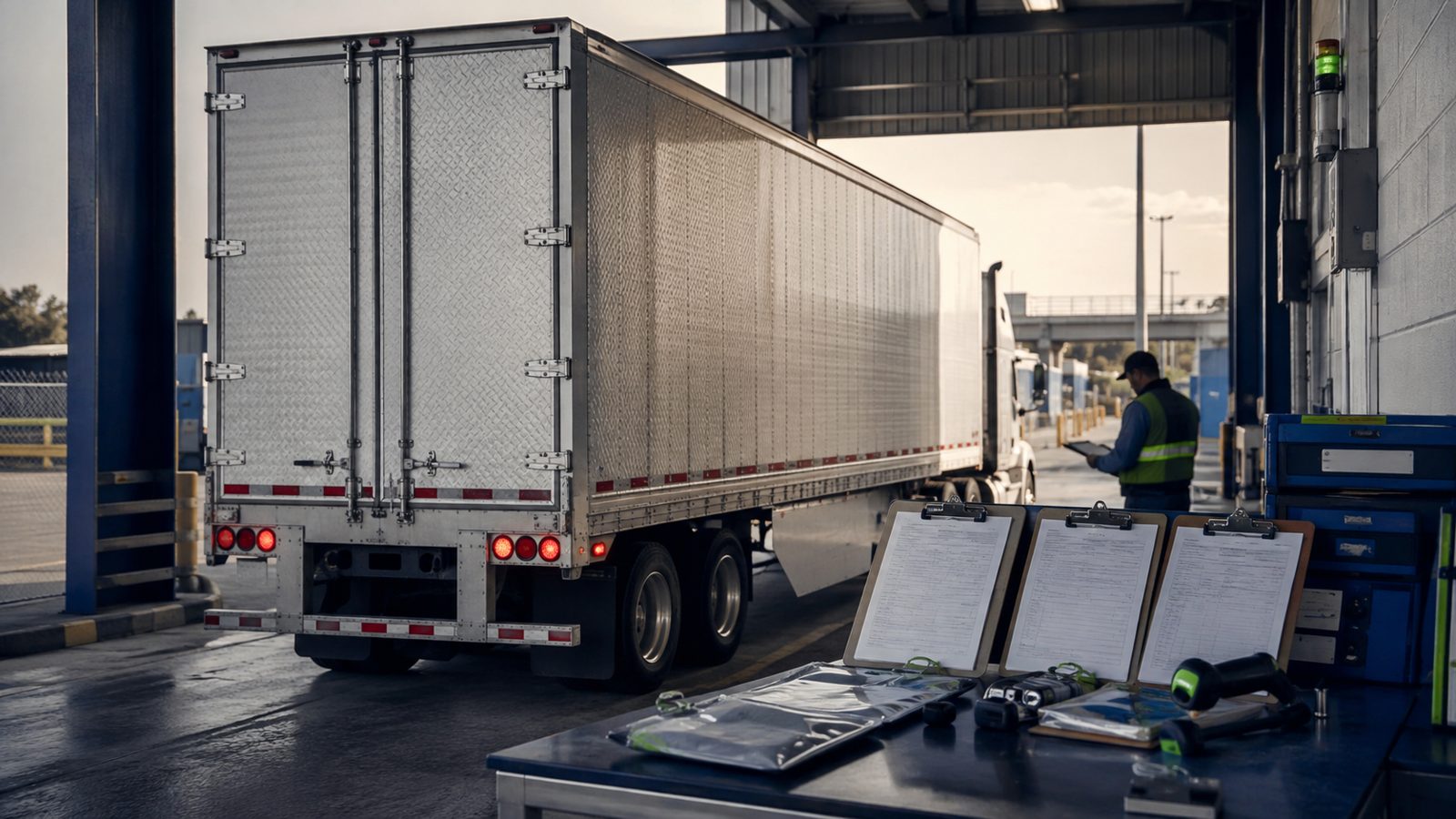
One shipment, several owners
A cross-border rate may cover the full movement even when several companies perform the work. Buyers need a clear view of the physical movement, filings, data, coverage, and payment path before the first tender.
- 1
Plan the shipment
- 2
Prepare customs and documents
- 3
Move through the Mexican carrier network
- 4
Cross the border and hand off custody
- 5
Deliver, document, invoice, and resolve exceptions
Record this for every stage
- Legal entity
- Physical custodian
- Required documents
- Data source
- Escalation owner
- Evidence of completion
What the interviews agree on
“Door to door” does not describe the operating chain
Matt Silver describes arrangements in which the buyer contracts with one company while separate carriers perform the U.S. and Mexican segments. The provider should be able to name the operating entity on every leg, explain when substitutions are allowed, and show how each handoff is recorded.
Buyer takeaway: Ask who performs the work, who controls the work, and who handles the exception.
Interview perspective: Matt Silver
Customs work begins with buyer-owned information
José Miñarro explains that a customs broker can prepare and transmit a filing, while the importer remains responsible for supplying accurate product, value, origin, and regulatory information. Buyers should confirm who owns each data point, who reviews the filing, and where the final record is retained.
Buyer takeaway: Replace “the broker handles customs” with a written responsibility map.
Interview perspective: José Miñarro
A system should preserve the operating memory
Joe Hurst emphasizes the risk created when records and compliance knowledge live with one employee. Matt Silver also distinguishes load-level records from messages trapped in personal channels. The operating record should survive staff changes, partner changes, and later audits.
Buyer takeaway: Test whether another person can retrieve the complete load record without searching an employee's inbox or phone.
Interview perspectives: Joe Hurst, Matt Silver
Delivery does not close the commercial journey
Jaime Tabachnik describes payment workflows that may depend on original delivery evidence, warehouse confirmation, stamps, or customer-specific document review. Mark Vickers adds another layer: claims and coverage decisions may continue long after the freight arrives.
Buyer takeaway: Trace the process through delivery, invoicing, payment, and claims.
Interview perspectives: Jaime Tabachnik, Mark Vickers
Five gaps that create expensive surprises
The carrier chain is unclear
A company name on the quote does not prove that company will haul every segment. Ask whether the Mexican carrier is owned, affiliated, contracted, or sourced for each load. Require approval rules for substitutions and recent lane-level evidence.
Customs ownership is vague
Before tender, identify the importer of record on each side, the customs broker or agency at each port, and the owner of classification, value, origin, product, permit, and regulatory information. The importer needs continuing access to the final filings and supporting records.
Documents do not agree
Separate the records needed for customs clearance, vehicle movement, warehouse receipt, invoicing, payment, and claims. Confirm which version is authoritative and which fields must match across the commercial invoice, customs filing, Carta Porte where applicable, bill of lading, purchase order, and proof of delivery.
Visibility ends at a handoff
Tracking should cover each operating carrier and identify the source of each status. Buyers should know what triggers an alert, who may contact the driver, how routing changes are approved, and what happens when location data disappear.
Coverage assumptions remain untested
Carrier liability, cargo insurance, and shipper's-interest coverage answer different questions. Ask what loss the carrier is legally and contractually responsible for, which policy responds, whether the full territory and subcontracting chain are covered, and which exclusions or security conditions apply.
Five steps before the first tender
Name one internal owner
Give one person authority to coordinate logistics, customs, tax, procurement, finance, compliance, and insurance decisions.
Map one representative shipment
Draw the route from origin to final payment. Include every carrier, customs partner, facility, system, document, and handoff.
Confirm importer and customs roles
Document who supplies product, classification, value, origin, permit, and regulatory information. Record who reviews the filing and retains the final file.
Put liability and coverage in writing
Confirm declared value, contractual liability, policy territory, exclusions, subcontracting treatment, claim notice, and who funds a disputed loss.
Test the exception path
Walk through a missing document, carrier substitution, tracking loss, customs hold, delivery dispute, or claim before recurring tenders begin.
Choose the route that matches your decision
Entering or expanding in Mexico
Establish internal ownership, importer and customs structure, document responsibilities, partner roles, and coverage decisions before the first tender.
- Importer structure
- Customs and product data
- First-lane operating test
- Written coverage decision
Recommended sections: One Shipment, Customs Ownership, Operating Record, Five Steps
Evaluating cross-border partners
Prove which entities, carriers, customs partners, systems, and subcontractors a provider actually controls.
- Operating entities
- Substitution rules
- Lane-level capacity
- Tracking and exception ownership
Recommended sections: Carrier Chain, Visibility, Operating Record

Auditing an existing network
Test recent loads against written procedures, approved partners, current coverage, and retrievable records.
- Actual versus approved carriers
- Repeated exceptions
- Expired partner records
- Payment and claim friction
Recommended sections: Documents, Operating Memory, Commercial Journey, Operating Record
Before pickup, build the operating record
For each decision below, name the owner and where the evidence lives before the first trailer moves.
Carrier chain
Do we know the legal and operating entity for every segment?
Record: Record the approved carrier plan and substitution owner.
Importer and customs
Are the importer, broker, and product-data owner confirmed?
Record: Record the final filing location.
Documents
Are the required documents and matching fields defined?
Record: Record the authoritative version.
Tracking and exceptions
Does every operating leg have visibility and an escalation owner?
Record: Record the contact path.
Coverage
Have liability and cargo coverage been reviewed?
Record: Record the policy, territory, exclusions, and claim notice path.
Delivery and payment
Are proof-of-delivery and payment requirements clear?
Record: Record the evidence and approval owner.
Your progress stays in this browser while you read. Nothing is stored to your CargoRex account.
What experienced teams keep returning to
Mexico's freight market has grown through decades of manufacturing, carrier investment, and operating relationships.
Noi MahoneyClearance depends on accurate buyer information and records that remain available after the shipment moves.
José MiñarroA single commercial offer can depend on separate U.S. and Mexican operators, so the handoffs need a visible operating record.
Matt SilverCompliance continuity weakens when one person's memory becomes the system.
Joe HurstFreight can arrive on time while missing delivery evidence delays the invoice and the carrier's payment.
Jaime TabachnikBuyers need to examine legal liability, policy coverage, territory, exclusions, and claims handling as separate questions.
Mark VickersFeatured in this guide
The companies behind this guide
The interviews in this guide connect buyers with operating perspectives. The related company listings below give you a place to continue that research on CargoRex.
Veroot
Cleveland, Ohio
Compliance and vendor management software for logistics, covering CTPAT and TSA programs, carrier vetting files, and records that stay available after clearance.
Services
- +CTPAT and TSA compliance software
- +Carrier vetting and vendor files
- +Retained compliance documentation
Best for: Importers and 3PLs formalizing compliance programs
Cargado
Dallas, Texas
Cross-border freight platform connecting U.S. and Mexican carriers with brokers moving northbound and southbound loads.
Services
- +Carrier capacity for U.S.-Mexico lanes
- +Broker and carrier matching
- +Load-level handoff context
Best for: Brokers and shippers sourcing cross-border capacity
CustomsNet
Laredo, Texas
Listing details are being confirmed with the company. Placeholder record covering customs brokerage and retained clearance documentation at the Laredo gateway.
Services
- +Customs clearance filings
- +Document retention and audit support
- +Border gateway coordination
Best for: Importers clearing through Texas border crossings
Listing coming soon
Solvento
Mexico City, Mexico
Listing details are being confirmed with the company. Placeholder record covering freight payment and settlement for Mexican carriers.
Services
- +Carrier payment and factoring
- +Invoice and delivery evidence review
- +Settlement workflows for Mexican carriers
Best for: Carriers and brokers managing Mexico settlement
Reliance Partners
Chattanooga, Tennessee
Commercial insurance agency for trucking and logistics, including cargo coverage, cross-border policy terms, and claims support.
Services
- +Cargo and liability coverage
- +Cross-border policy review
- +Claims and risk transfer guidance
Best for: Brokers and carriers reviewing cross-border risk
FreightWaves
Chattanooga, Tennessee
Freight news and market data organization reporting on Mexico and U.S. cross-border transportation, capacity, and trade policy.
Services
- +Cross-border market reporting
- +Freight rate and capacity data
- +Trade policy coverage
Best for: Teams tracking market and policy changes
Also worth knowing
Not interviewed, but still important to mention
This guide could not include every relevant company. These listings give buyers more paths to continue their research.
TRAFFIX
Mississauga, Ontario
U.S., Mexico, and Canada operations with bilingual teams, border drayage, bonded warehousing, carrier vetting, and USMCA experience.
Nuvocargo
New York, New York
Mexico-U.S. freight forwarding and transportation management, including customs coordination and cross-border visibility.
G-Global
San Diego, California
CaliBaja customs and integrated logistics experience with direct Otay Mesa and Tijuana relevance.
Braumiller Law Group
Dallas, Texas
International trade law practice covering customs, USMCA qualification, and enforcement matters across the United States and Mexico.
From the interviewer

Blythe Milligan
Founder of CargoRex · Host of Everything is Logistics
I build CargoRex for the stage of a technology decision where the wrong fit is easiest to pick and hardest to undo: the moment a team is comparing companies in a category for the first time.
My goal with CargoRex interviews is to present each conversation as if I am the potential buyer asking the questions I would want answered before I ever book a demo.
My editorial voice still lives on the Everything is Logistics website. What you read here stays focused on what a buyer needs to know.
Helpful links for your Mexico cross-border journey
- U.S.-Mexico goods trade data
Official monthly and annual trade balance figures.
- USMCA agreement history
Agreement text, background, and implementation record.
- Mexico Customs Law
Statutory basis for importer and broker obligations.
- VUCEM customs portal
Mexico's single window for customs filings and permits.
- Mexico Federal Roads, Bridges and Motor Transport Law
Rules covering federal motor carriage and road use.
- CBP cabotage reference
Guidance on equipment and driver movement at the border.
Requirements change. Confirm current rules, ports, partners, policy terms, and effective dates before acting.
Quick poll
Where does your cross-border process feel least clear?
Your answers help us know what to cover next.
Continue your cross-border research
Use CargoRex to find relevant companies, compare their fit, and build a more focused shortlist.
Explore cross-border providersHelp improve the next CargoRex guide
Do you work directly in U.S.-Mexico freight? Share an operating insight, an unresolved buyer question, or a perspective supported by experience. CargoRex may follow up about future research, interviews, or content collaborations.
Contribute insights